Cesarean Section Births – An Alarming Trend
Experts question why Florida’s C-Section rate is so high. Are decisions for surgical intervention being made for the right reasons?
 Orlando mom, Kristen Jensen, is anxiously awaiting the birth of her fourth child. It’s not the daunting task of adding to her brood that worries her, but rather it’s the fact that this will be her third cesarean section in two years, her fourth overall. “I love my kids; I’m a master at this,” says the 28-year-old mom. “But, I know this is going to be my last baby.”
Jensen’s history of repeat C-sections, the term used to describe the extraction of an infant, placenta, and membranes through an incision in the abdominal wall, is in line with the growing trend of mothers across the nation who undergo this surgical procedure during childbirth. Nearly 40 percent of Florida newborns are delivered via C-section, according to a HealthGrades survey released in July. HealthGrades is a recognized resource for measuring healthcare quality.
Beginning in the 1970’s, the cesarean delivery rate exploded from 5 percent to a record high of nearly 32 percent in 2007, according to The American College of Obstetricians and Gynecologists (ACOG). The World Health Organization recommends the C-section rate stay lower than 15 percent.
Like Jensen, women whose first child is born by C-section will likely face all subsequent deliveries via the same method, leading to a surge in the C-section rate. Physicians are working to bring the rate down, including here in Orlando, where obstetricians at Winnie Palmer Hospital for Children and Babies are taking a close look at first-time mothers to address the alarming trend.
Jeannie McWhorter, MD, director of Winnie Palmer’s OB/GYN faculty practice for Winnie Palmer Hospital for Women & Babies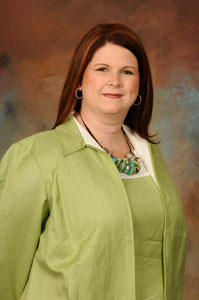 Comprehensive Women’s Healthcare, is leading the charge after officials noticed the hospital’s C-section rate had climbed to 43 percent in 2009. Dr. McWhorter states that while the number of mothers requesting C-sections has declined, the “legal climate” for doctors has not, resulting in doctors being more cautious because of the threat of litigation if something goes wrong in the delivery room. “Doctors are worried about being sued so they practice defensive medicine,” Dr. McWhorter says, adding she wasn’t surprised by Florida’s top ranking in the survey.
If the baby’s heartbeat drops during labor, or labor isn’t progressing as fast as the doctor expects, a C-section is often the preferred method of childbirth. But with each subsequent delivery via C-section, the risks increase and the procedure is more difficult because of scar tissue.
Dr. McWhorter estimates that she delivers, on average, 300 babies a year, not including those she attends at the hospital. A primary C-section can take about 30 minutes while some repeat C-sections can take up to an hour because of scar tissue. In addition to scar tissue, according to ACOG, each subsequent C-section increases a woman’s risk of:
- Hemorrhage and wound complications
- Hysterectomy
- Bowel and/or bladder injuries
- Blood transfusions
- Infection risks such as MRSA
- Abnormal placenta conditions, including placenta previa and placenta accreta.
The HealthGrades survey also identified several factors associated with the rise in C-sections including:
- An increase in the practice of induction and early epidurals
- Convenience of prearranged delivery time for both the doctor and/or the mother
- Increased maternal age
- Maternal factors such as obesity and diabetes
- Increasing willingness of doctors to perform C-sections
- Increase in multiple births (twins, triplets), due to maternal age or fertility treatment
- Maternal-requested C-sections
- Physicians’ fear of malpractice if they fail to perform a C-section
With some doctors, the C-section option is brought up before the patient is even in labor. While Jensen does not regret any of her C-sections, she was surprised at how nonchalant her obstetrician sounded while suggesting induction or C-section six years ago with the birth of her first daughter, Samantha. “My doctor told me I was a good candidate for a C-section as though she were telling me to go buy cookies,” Jensen says. “I think a lot of doctors make the right decision, but others jump to a decision because it’s easier to do a C-section.”
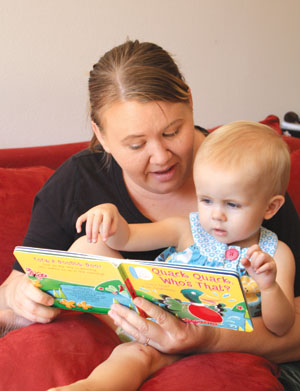 It’s these conditions that Orlando mom Rhonda Hooper hopes to avoid. Her diabetes forced her to be induced at 38 weeks with her daughter, Allison, in February 2010, while Hooper had the best intentions of having a vaginal birth. After 26 hours of labor, Hooper was told Allison’s heart rate was dropping and an emergency C-section was needed. “I thought pregnancy was a natural process. My grandmother had 10 kids,” Hooper reports, admitting she’s nervous about the risks, such as a staph infection, associated with repeat C-sections. “But, I don’t want to end up dying.”
There are times when a C-section is safer for mother and baby and parents should discuss this with their healthcare provider. Dr. McWhorter understands the fears some mothers have about C-sections and says first-timers can try to avoid the surgery by staying active during their pregnancy, maintaining a healthy weight, taking control of their blood sugar if diabetic, and refusing, if it’s safe, an induction before 39 weeks. “The ultimate goal is a vaginal birth with a healthy baby,” she says. However, when a C-section is deemed medically necessary, Dr. McWhorter reassures her patients that they have tried to meet their goal and shouldn’t consider themselves failures.
C-Section may be recommended if:
- Labor isn’t progressing
- The baby’s heartbeat suggests lack of oxygen
- The baby is in an abnormal position
- Mom is having multiple babies
- The placenta detaches
- The umbilical cord is out of position
- The baby’s head is too large
- Mom or baby has certain health issues
- There has been a previous C-section