Giving it the Old College Try
For many prospective students, the final decision on where to attend college comes down to their experiences during a campus visit.
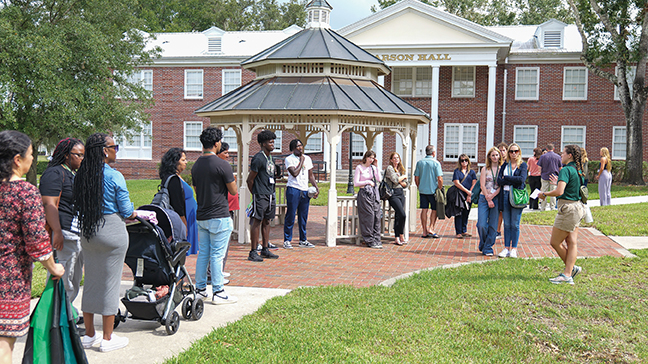
With an average yearly college cost of $38,270 nationally, choosing the right place to spend the next four years (and possibly beyond) is a very important decision. On-campus visits often play a big part in admission decisions for a reason—they’re a way for students to trial run the college, providing a richer experience than reading statistics and looking at photos on a computer screen.
“Getting a feel for the campus environment is essential for students to feel comfortable and prepared,” says Jessica Applewhite, associate director of event management at Florida Tech. “It’s not just about navigating the physical spaces, but also understanding the culture, community and resources available.”
Planning ahead, making intentional choices and scheduling appointments can turn a historical tour around campus into an impactful and meaningful interaction.
Many colleges will allow prospective students to schedule meetings with professors, admissions staff, financial aid folks and more to ensure every question is answered.
“Colleges all have key locations, amenities and resources that you need to explore. But at the end of the day, the people at the college with you—faculty, staff, peers, etc.—are the ones who will have the most significant impact on you,” says Josh Jones, director of admissions at Florida College. “When you visit, try to meet a professor. Have a conversation with a current student about their experience. Talk to the admissions team about why they love promoting their college. These conversations give insight into the environment you will be in and the people who will help you shape your future.”
Scheduling an appointment with a professor may help students better understand the academic rigor and style of a potential college, while an admissions counselor will be eager to chat about the best things about the campus, including lesser-known tips and tricks. Meeting with a member of the financial aid office may help to ease anxieties surrounding the cost of tuition and set students up for the best possible outcome in terms of student aid, and having a chat with a current student can help provide a realistic and social picture of the campus.
It’s important to not just talk to different people but to connect with them, asking questions that will help you better understand the process so that you can make a well-informed decision.
“Prepare to ask questions before you visit. Visiting a campus is an amazing opportunity to know what you want to know,” says Jones. “Each school will present information to you but having questions allows you to see if the school is a good fit for you and allows the school to show you what your place might be at their college.”
In addition to heading into a college tour with questions and a plan, you should also keep an open mind, as a college you’re not really interested in can end up being the perfect place for you.
“It is easy to make opinions based on what others have told you about a university, what you receive in the mail from a university or what you see on the internet,” says Applewhite. “Keeping an open mind can allow you to explore all the aspects of a campus and student-life experience. Universities often have a lot more to offer than what meets the eye. On a tour, you may discover new opportunities or find a passion that you may have not considered.”
While on campus, you’ll want to check out the obvious hot spots—libraries and study areas, food halls, classrooms and dorms—but a little research into the school or a conversation with an admissions counselor might reveal some hidden gems. Finding a great local cafe where you can study or grab a cup of coffee, or exploring specialty locations like Florida Tech’s Mertens Marine Center can help to paint a picture of daily life and the exciting offerings the college and its community have to offer.
“Visit as many schools as you can,” advises Jeffery Gates, Ph.D., senior vice president of enrollment and marketing at Stetson University. “It’s important for the student and the family to understand the vibe of the campus. They can get that through our website and social media, but an official in-person visit [allows] you to get to meet and interact with students, faculty and staff in a really deep and different way.”
Furthermore, don’t be afraid to visit a school multiple times. Once you’ve settled on a few schools that really interest you, it can be beneficial to check out their other open house programs.
Many schools will often host admitted students days, “shadow” visits, high school competitions and more. Each program is set up to meet the needs of students no matter where they are in the college decision process.
“Early on you’re probably going to a junior open house or a daily campus visit, but once you’re accepted to the institution, there are other events that you’ll be invited to,” says Gates. “By coming to multiple events, you may pique your interest. Once you get your acceptance, you may say, ‘Oh, great, now I may need to take the next step.’ Then you could do a shadow visit, a school-sponsored event or even an off-campus event.”
Admitted student days allow students to connect with other students who, should they accept their admission, may become classmates, peers or even roommates, and serve as an excellent opportunity to see if the campus inspires a feeling of belonging. Transitioning from a structured high school schedule to the freedom (and responsibility) that college comes with is often a stressful time for students, and attending admitted student days allows the opportunity to walk into the first day of college with a few friendly and familiar faces around campus.
Likewise, “shadow” visits allow students to sit in on a class, chat with students and professors and overall get to experience what daily life is like on campus. It can help to alleviate jitters as it won’t be the first time you’ve walked into a college classroom.
Financial aid, course styles and degree plans are all major considerations, but so is finding a place that feels like a home away from home.
“A big-name school doesn’t guarantee success,” says Lenka Brady, cofounder of the Young Founders Institute. “Students should consider the culture, opportunities and flexibility the college offers and ask themselves questions like: ‘Will I thrive here?’ ‘Does the school provide hands-on experience, internships and industry connections?’ and ‘Can I shape my education around my goals?’”
In the end, no matter where or when the tour takes place, it’s important to have fun. Going off to college—as anxiety-inducing as it may be—is meant to be the next step toward the future you dream of for yourself.
“The right college—or no college at all—should be a launch pad for your dreams, not a detour,” continues Brady. “Choose a place that fuels your vision, connects you with the right people and gives you the freedom to build something great.”