The Calm Before the Storms
With hurricane season fast approaching, getting prepared with the advice of experts is imperative, whether as a seasoned resident or a newcomer.
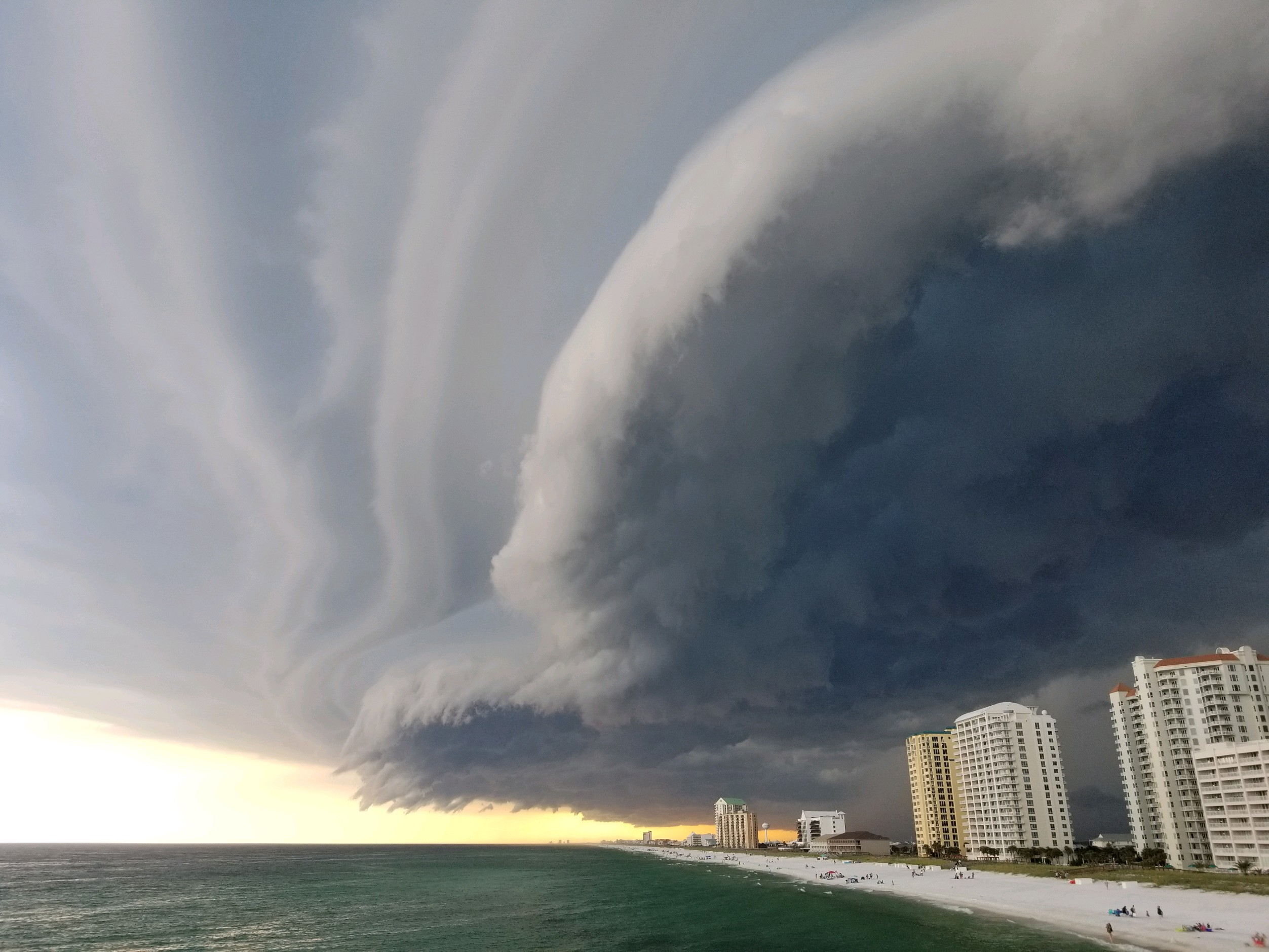
From June 1 to Nov. 30, when ocean water is the warmest, hurricane season is a major concern for those throughout Florida and in the surrounding coastal and Gulf states.
With Florida being one of the fastest growing states in terms of population, there are many new residents in the Central Florida area who may not know what a Florida hurricane season entails.
An impending large-scale storm can be unnerving for anyone, but a sense of preparedness and understanding of what to expect can help ease that feeling, with local meteorologists being one of the best sources for what to expect and how to prepare.
According to Colorado State University, this year’s season is expected to be slightly below average with a predicted 13 named storms, six hurricanes and two major hurricanes, compared to long-term averages of 14 named storms, seven hurricanes and three major hurricanes.
The most active period is predicted to be the first half of the season from June to August, with the second half less likely to see major storms due to El Nino conditions, meaning the usual peak months of September and October will see reduced activity this year.
While forecasts are available for how many storms are likely, there is no way to predict exactly what areas will be affected when they do make landfall.
“Seasonal forecasts are about the total number of storms across the entire basin. It only takes one hurricane making landfall near you to make it a bad season for your household. Hurricane Andrew in 1992 is a classic example. It struck during an El Niño year with an otherwise slow Atlantic season,” says Fox 35’s Good Day Orlando meteorologist Brooks Garner.
One important thing to keep in mind is the difference between a watch and a warning. A watch means that conditions are possible, while a warning means that sustained winds of 74 miles per hour or higher are expected within 36 hours of the issuance of the warning. Knowing this difference can give residents a better sense of what specific measures they should be taking at that moment to stay safe.
Before a storm is on the horizon, some things need to be prepared ahead of time, like having flood insurance, which is not usually included in home insurance packages but is an important protection to consider.
“It takes 30 days for it to go into effect. You can’t wait until a storm is bearing down and decide to get flood insurance. It’s going to be too late,” says Tom Terry, WFTV’s chief meteorologist.
Tree limbs should also be trimmed and outdoor items should be brought inside beforehand to reduce risks of creating flying debris, and everyone should stay weather aware to ensure they know what conditions will look like before leaving the house.
“Once we get into the hurricane season, just keep an eye on what’s going on in the tropics. … We get so busy with family life, sporting events with the kids or whatever, sometimes it’s just easy to forget. So, all of a sudden, we’re in the cone, everybody’s blowing up your phone. ‘What are you doing? Are you getting ready for the storm?’ So, just keep ahead of it,” says Tony Mainolfi, chief meteorologist for WESH2.
Everyone throughout the state is encouraged to “Know Your Zone,” so that they are aware if they need to board up, evacuate and where to travel to when necessary. Those closer to the coast and more at risk of danger from storm surge are encouraged to evacuate earliest. Keep gas tanks full before the storm hits as well, in case of emergency evacuation.
Keeping important documents, like flood, auto and homeowner’s insurance policies, IDs, medical records, and birth and marriage certificates in a waterproof container is also recommended in case of emergency. For more tech-savvy residents, keeping a backup of these important documents on the cloud is another option.
In order to stay in touch with others and stay up to date on information and official warnings, some recommended safety measures include having battery-powered or crank radios, flashlights, batteries, phone charging banks, and reliable news and weather apps on your phone.
Unfortunately, both misinformation and disinformation can run rampant in the event of a major storm. To avoid being misinformed about potentially critical information, only rely on updates and announcements from trusted sources like local government alerts or trusted news networks rather than what is being spread across social media.
You’ll also want to keep cash on hand in case the power goes out and systems for credit card processing are down.
Non-perishable food, a can opener, prescription medications, first aid and pet supplies, and one gallon of water per person, per day for a week, are also items that residents should have on hand.
“The reason behind prepping this far in advance is, we don’t have any storms threatening us right now. We could approach it with a level head and really plan everything out. Whereas when a storm is threatening our area, over the course of a couple days or even a couple hours, you’re not going to be able to do all the preparation that you need to. So it’s always good to have that kit perpetually ready if a hurricane hits,” says Megan Borowski, a senior meteorologist for the Florida Public Radio Emergency Network.
For anyone who chooses to use a generator to keep their power going through a storm, it is critical that the device is properly used. Portable generators are the cause of a significant number of post-hurricane deaths as the result of carbon monoxide poisoning. To avoid this, generators should never be used in enclosed areas like garages, even with the door open. These devices should only be used outside, at least 20 feet away from the house itself and in conjunction with portable carbon monoxide detectors.
For individuals or loved ones with special needs, especially anything like requiring oxygen which necessitates working electricity, going to a local shelter may be the best course of action. However, pre-registration with these shelters is highly recommended to ensure all special needs can be attended to.
“You may end up having to go to a shelter, and if that’s the case, then you have to register with the county’s Emergency Operation Center beforehand, and that’s something a lot of people don’t know either. So it’s just little things like that that you need to start looking into now, so that you’re not having to scramble,” says Terry.
Everyone, regardless of needs should know evacuation routes and shelter options, pet-friendly locations where they can take any animals and establish a family meeting point in case of separation.
In the aftermath of the storm, it is important to stay off roads until they are fully cleared and be on the lookout for downed power lines, which can be extremely dangerous. New residents who have yet to experience a hurricane season in the state may underestimate just how long disruptions can last, so it is imperative that they stay up to date with alerts from local authorities.
“Take some time to educate yourself on the risks in your particular neighborhood. If a storm hits, what would the most likely conditions be? You could take a look at resources from your local county government, your community and even from your local National Weather Service office to get an idea of what typically happens in the immediate area when there’s a storm. And don’t underestimate the potential of a storm impacting your area. Don’t skip over putting together that kit and educate yourself on having that kit together and also the resources [available] in your immediate neighborhood,” says Borowski.