Keep Your Eye on the Ball
Many athletes today feel pressured to specialize in one sport from a young age, but there are risks involved, from overuse injuries to mental burnout.
Back when he was coaching high school basketball in Washington, D.C., one of Steve Turner’s players was future NCAA hero Kris Jenkins, who went on to hit perhaps the most famous buzzer-beater in March Madness history to lead Villanova to a national championship.
Now Turner is the head coach at arguably the top high school program in the country, Montverde Academy right here in Central Florida, which has produced two of the past five No. 1 overall draft picks in the NBA: Cooper Flagg and Cade Cunningham.
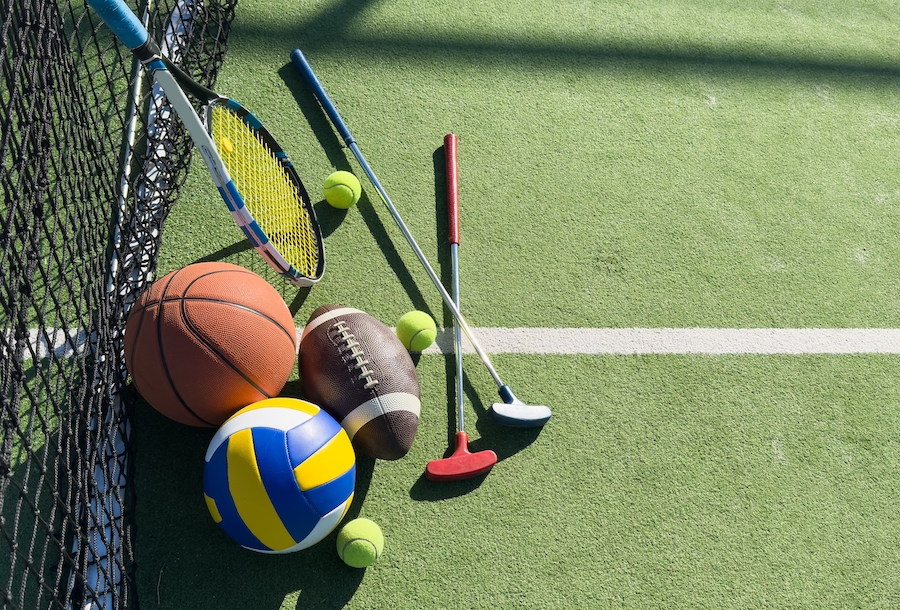
Considering that pedigree, one could assume that Turner is all for sports specialization, which more and more athletes seem to be embracing these days. Instead of playing a different sport each season, the idea is to choose one to focus on year-round, with multiple teams, private lessons and exorbitant travel fees becoming the norm, all in the hopes of becoming a star player, earning a college scholarship and even making it all the way to the pros.
Yet Turner, like many coaches, administrators and sports physicians, doesn’t necessarily see sports specialization as a healthy trend. While he stresses that each athlete is different, that it should be a family decision and that ultimately picking one sport could be the right path, he doesn’t believe it has to happen before a child has even stepped foot in high school.
“You used to have a lot of two- or three-sport athletes, and now you see kids who truly specialize in one, 365 days a year,” Turner says. “It’s a little bit sad when kids are putting all of their eggs in one basket at a grade school or middle school age, because I think they don’t know what they don’t know.
“A ninth grader, if he’s a pretty good athlete in two sports, should try to do both in high school and see what it looks like. If they don’t feel like it’s getting them where they want to go, then they probably have to make a decision. But I think it’s worth it for a kid who grew up playing basketball, baseball and football since fourth grade to keep trying.”
Overuse injuries, burnout and excessive costs are the main reasons given for why sports specialization at a young age can be problematic. On top of those, missing out on the opportunities to enjoy other sports, make more friends and learn important life lessons are often cited as well.
Patrick Hollern, who has been a successful basketball coach in his home state of Pennsylvania and in Florida, has been the athletic director at Windermere Prep for the past seven years. When asked when kids should specialize in a particular sport, he doesn’t beat around the bush.
“Never,” he says. “I would love to get that message out to as many families [as possible].”
“There are so many benefits to multi-sport participation,” Hollern adds. “At the end of the day, 98 or 99% of kids, their career ends in high school, and I’m not saying that negatively. It’s a small percentage of kids that go on to play at the collegiate level, whatever level that is. These times, these experiences, what you did with your friends, all of that has so much importance on your development in the next 20-25 years of your life as an employee or a boss, a husband or a wife, a friend. Those are the real benefits.”
Jen Darty played multiple sports as a kid before focusing on volleyball in high school due to her aspirations to compete in college. Now the girls volleyball coach and athletic director at Oviedo, she believes many young athletes feel the pressure to pick one sport in middle school or earlier.
“It’s great when they have the passion and they’re all in, but I also think it can produce burnout,” she says. “At the high school level we see a lot of multi-sport athletes within cross country and track, swim and water polo, or even volleyball and beach volleyball now. I think it’s great for kids to be actively involved in other teams, programs and sports. It can only make them better athletes and better teammates, seeing different perspectives and hopefully preventing burnout.”
After leading Oviedo to a state championship this past fall, Darby and her players were back on the court just a few days later for the start of club season. She would like to see them get more of a break and time to be a kid.
“Volleyball is a sport—like basketball, soccer and a lot of team-based sports—that if the athlete wants to continue playing at a high level, the perception is out there that it’s pretty much year round,” Darty says. “They go to club practice from November until July, and then in July we pick back up with high school. So it is a year-round cycle and I think in a lot of scenarios, they feel that if it’s broken they might miss an opportunity to get recruited to play at the next level. To me, it’s too much. I wish a timeline would give, ideally on the club side of the table because I think that season is too long and you’re seeing more and more overuse injuries and burnout.”
Andy Chiles, a longtime Florida athletic director who is in his first year in that role at The First Academy, doesn’t fully buy the claim that an athlete has to play for a club or AAU team to be recruited by a college, or that college coaches prefer if the athlete specializes in their sport. College football coaches, for example, have been known to sing the praises of wrestling, basketball and track in developing useful skills for the gridiron.
“Colleges can see you more in a club setting or an AAU setting, no doubt, but if you’re good in high school, colleges are paid to find you,” Chiles says.
“I’ve been around a long time, but here’s what I think: Students who are younger should do as many things as they would love to do, because they’re young still,” he continues. “As they start getting to the high school age, if they want to specialize, that would be a family decision, but I believe in today’s athletic world that college coaches like well-rounded athletes who do multiple sports.”
Even athletes in a sport like tennis, which has traditionally been viewed as one that requires specialization from a young age, can pick up skills from other activities.
Rita Gladstone was a standout college player at South Carolina and spent some time on the Women’s Tennis Association Tour, and now is a head professional at the United States Tennis Association (USTA) National Campus in Lake Nona. She oversees junior programming, working with kids from age 3 through high school, and explains that the USTA’s approach is to treat tennis as a long-term development sport.
“It’s very much an improvisational sport—every shot is different, so the more players learn adaptive skills through tennis and other sports, there’s a greater chance for long-term success,” she says. “So doing soccer, baseball, swimming, football—there are multiple examples of professional players who did that and became world-class. That’s one thing that the USTA, through its American Development Model, highly encourages, and I do as a coach.
“Multi-sport activity decreases burnout, they learn other skills, and it prevents overuse injuries. [American pro] Ben Shelton is currently a great example. He played football and other sports through middle school and even up to 14 or 15, and then really developed [in tennis] at 21, 22. So I think that’s something that is maybe a misconception about becoming a world-class player.”
Gladstone enjoys working with players of all levels, whether they aspire to compete in high school, college, the professional ranks or just hope to find a sport they can play recreationally well into adulthood. The key is for the child to be the one who is passionate about the sport.
“A term we use is that you really want to have the player driving the bus and the parent be the passenger in the back seat, not the other way around,” she says. “I’ll hear parents say, ‘We’re playing in a tournament this Saturday,’ or ‘We’re going to take next weekend off.’ Little things like that are telltale signs. It should be about the player and having them own their sport and own their experience. In any sport, to be successful you need a supportive parent—you need somebody to drive you there and make sacrifices. But there needs to be a balance between supportive and encouraging, but not driving it or speaking for the kid.”
That goes for the ultimate goal of the training, too.
“Every player has potential, and we’re going to develop your son or daughter to be the best player they can be,” Gladstone says. “You shouldn’t think about this like an index fund or an account where you think you’re going to have a payoff at the end, just because of everything you invested. Just because you invested all of this money does not mean you’re going to get a payback with a scholarship. The investment you put in is your child developing as a person through tennis.”
Pushy parents can also impact a child’s health. Dr. Elizabeth Davis is a pediatric sports medicine physician at the Orlando Health Jewett Orthopedic Institute, and also the team doctor for several high school programs and a volunteer physician for USA Gymnastics. One of Dr. Davis’ clinical interests is concussions in youth sports, and she recently had a patient who suffered her first concussion and was still experiencing headaches.
She explained to the family that the child had to be completely symptom free before returning to her contact sport. The parents asked if they could sign something to bypass that rule and allow her to start playing again.
“That’s one example, but I do have a lot of parents who are very supportive of our thorough protocols ensuring athletes are safe to return to their sport,” Dr. Davis says. “Parents have said to me, ‘My child has one brain, so we are taking care of this until he’s ready. I don’t care if he ever goes back to football.’ There are parents who are very aware, are very compliant and follow our recommendations. But we still have a handful of parents who don’t believe it and want their kids to go back to sports.”
Dr. Davis notes that overuse injuries are common with young athletes who specialize in one sport year round and recommends not doing so until late middle school or early high school age.
“There are a couple of reasons why we see overuse injuries,” she says. “No. 1, it’s because they are using the same joint or arm or leg over and over again. Baseball pitchers are constantly doing that overhead motion with throwing, so they have shoulder issues and elbow issues. But also we see those issues because of their growth. Because sports specialization has started so much younger, these kids are doing one sport and doing it very intensely while they’re going through puberty and going through their growth spurts. So they are more likely to have overuse injuries because those growth plates are susceptible to injury, especially when you’re doing a lot of repetitive activity.
“It’s better if you can cross train or play two or three different sports. For example, do swimming in the fall, do basketball in the winter and do golf in the spring. If you do three different sports, you’re alternating the joints and the muscles that you’re using and you’re also giving your body a break from one sport while still remaining active. … They can play sports year round, just switch it up.”
She adds that burnout is also an effect of sports specialization, which see sees more widely with young female athletes but males as well. Hollern, the Windermere Prep AD, also notes the pressure kids face today can affect mental health, which sometimes means kids would rather train than actually compete, due to a fear of failure.
“Our generation didn’t have the daily, behind-the-screen judgment that these kids have to go through today, and I think that’s a concern for the mental health of these kids,” he says. “If someone didn’t like you in high school [when I was young], they would just tell you or avoid you. Today, with Instagram and all this social media, these kids live in a highly judgmental society in which they don’t communicate [directly] with anybody. It’s completely different.
“Kids today are horribly afraid to fail, and because of that, they won’t try. We all know, whether it’s sports, your job, your relationships, failure is a part of it. You’re going to fail. How are you going to come back? I’m afraid that with a lot of the stuff we’re teaching kids in youth sports, they’ll just go to a new team. They never face it.”
Young athletes today also have more adult mentors in their ear. It used to be just a school coach giving them instructions, but now they have club or AAU coaches, along with private instructors, and if the philosophies are contradictory, it can be confusing for the athlete.
“The thing I try my best to do is partner,” Turner says. “Let’s all talk, let’s look at what you’re doing, let’s figure out what that child’s need is. Let’s not say I’m the expert and it should only be my way, or you’re the trainer and it should only be your way. I try my best to find out who’s in my kids’ circle, and go watch what they’re doing with them, have conversations and Zoom calls, and make sure that the young man’s needs are being met all the way around and that we’re a team for this child, not everybody thinking they’re the GOAT and it’s all about them.
“It was a different time 20-something years ago when I started. If you’re not evolving with the game and the things that come into these kids’ lives, then you’re setting yourself up for failure. It’s not just about us as the coach—we’re serving the young men so we need to make sure we’re in the best space for him, or for her if it’s a young lady. I pride myself in trying to move with the times.”
Hollern agrees that club sports and private training aren’t going anywhere and certainly have their place, but he believes in the true spirit of high school sports—the school pride, the bonds with teammates, the lessons of balancing games and practices with schoolwork.
“There’s true value in the multi-sport athlete in youth and high school sports,” he says. “I can never see myself changing that opinion.”
In the end, it’s really about the best interests of the child—making sure they are finding an activity they love to do, can do so without harm, and perhaps even find a lifelong passion.
“I have an 8-year-old daughter, and my goal for her sports activities is for her to be able to do everything recreationally,” Dr. Davis says. “If she desires to do something competitively, then great, I will let her do that. But that is not my goal. She does tennis and swimming, and she also loves basketball. My goal for her is to learn how to play those sports, so that she can do that even when she’s older. Tennis is a lifelong sport, swimming is a lifelong sport, and basketball is a great team sport where you learn to work with other kids and follow coaches. My goal for her is to learn the benefits from sports participation, and to do them later in life if she chooses. I don’t expect her to go to the Olympics or be a professional athlete—she’s doing this for fun.”