The Art of Reinvention
From child star to Oscar winner to director and producer, Natalie Portman’s career has been marked by discovering new passions and challenging herself to succeed in each one.
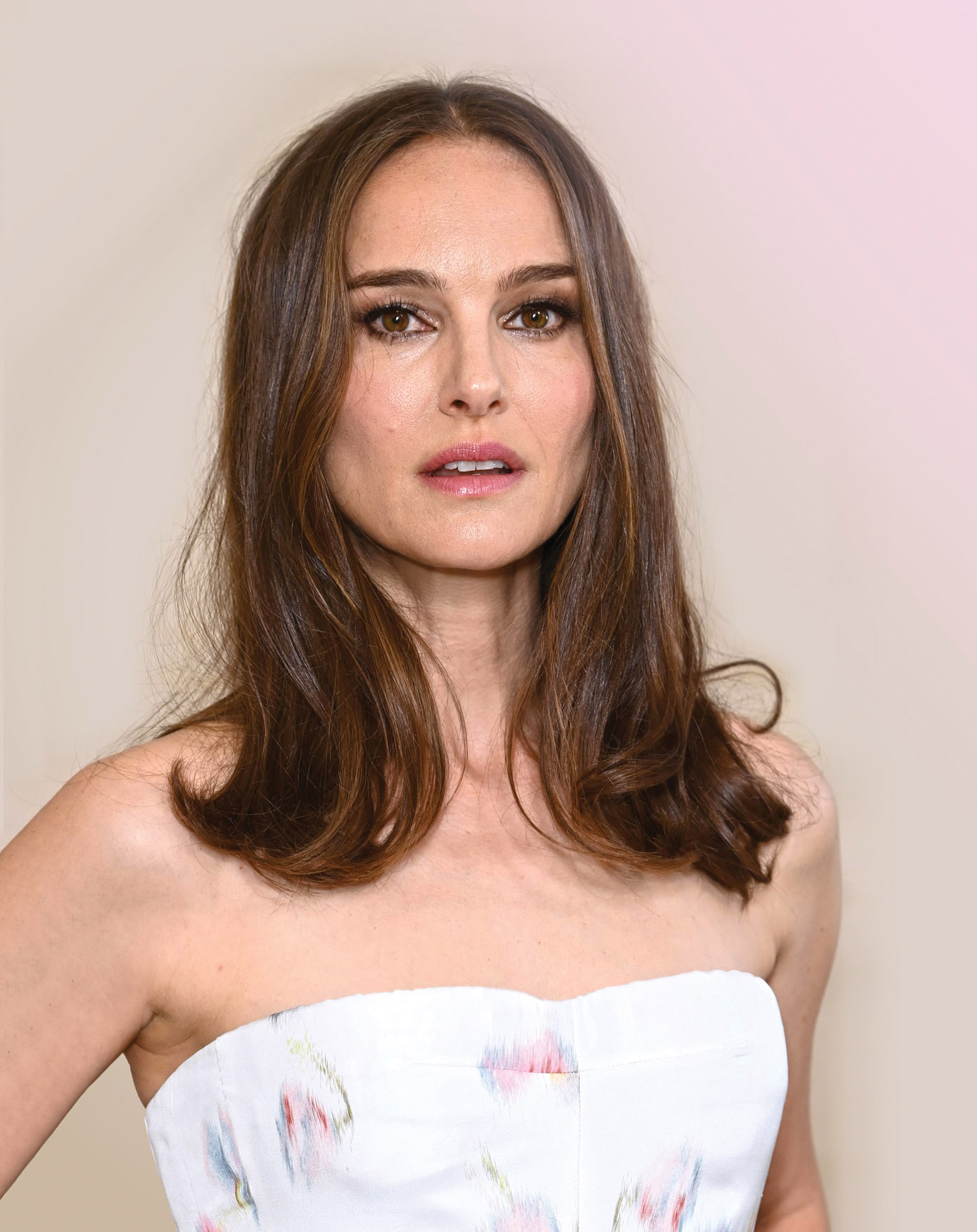
There is a particular quality to Natalie Portman’s career that has always set her apart. While Hollywood has spent three decades trying to turn her into a recognizable type—the gifted child, the intellectual, the beautiful leading lady, the Oscar-winning actress—she has remained determined to resist the idea that any one of these descriptions should define her.
From her extraordinary debut in Léon: The Professional to the psychological intensity of Black Swan, Portman has built a career on transformation. Yet her interests have always extended beyond acting. A Harvard graduate, director, producer and passionate reader, she has increasingly used her influence to develop projects on her own terms, championing female filmmakers and stories that challenge conventional ideas about women.
There have been changes in her personal life, too. The experience of becoming a mother, spending time in Paris and stepping away from the Hollywood treadmill have helped her reconsider what success means. These days, she seems less interested in maintaining a particular image than in preserving the freedom to surprise herself.
And there is certainly no shortage of surprises ahead. Her projects this year have included The Gallerist, a darkly comic satire of the contemporary art world, and Good Sex, a romantic comedy directed by Lena Dunham. Meanwhile, her production company, MountainA, continues to develop original material, including a science-fiction adaptation of Jeff VanderMeer’s Constellations.
For an actress who began working at 12, the most interesting question is no longer what Portman can achieve. It is how she intends to use the extraordinary experience she has accumulated—and what happens when someone who has spent a lifetime inhabiting other people’s stories becomes increasingly interested in creating her own.
You’ve been acting professionally since you were a child. Looking back, does it feel as though you’ve lived several different lives already?
It really does. When I look at photographs from different periods, I can recognize myself, obviously, but I can also see how much I’ve changed. There is the little girl who arrived on a film set with absolutely no idea what the future might hold, the teenager who was trying to work out how to be a normal person while doing something rather extraordinary, and then the adult who began to understand that she could make choices about the kind of life she wanted.
Acting is a strange profession because you spend so much time pretending to be other people. That can be a wonderful way of understanding the world, but I think it is also important to establish who you are when the cameras stop rolling.
For a long time, I was learning by observing everyone around me. I was watching directors, actors, writers and the people working behind the scenes. I was also trying to understand the world outside the industry, because I didn’t want my entire experience of life to come from Hollywood.
I think the most valuable thing I’ve learned is that you don’t have to arrive at a final version of yourself. You can continue changing your mind, discovering new interests and becoming a different person. In fact, I hope I always do.
Your first major role was Mathilda in Luc Besson’s Léon: The Professional, when you were just 12. How did that experience shape you?
It was an extraordinary introduction to filmmaking. I was so young that I didn’t fully appreciate the scale of what I was doing or how the film would be received. I knew I loved acting, and I was excited to have the opportunity, but I wasn’t thinking about a career in the way that an adult might.
My parents were understandably cautious. They knew the stories about children who had found fame very young and then struggled with the consequences. They wanted me to have an ordinary life as well, to continue my education and to have interests that had nothing to do with acting.
My mother traveled with me when I worked, which meant I had someone familiar beside me in what could otherwise have been a rather overwhelming environment. My father remained occupied with his work, so the arrangements required sacrifices from everyone.
I am grateful that my parents took my ambitions seriously without allowing them to become the only thing that mattered. They supported me, but they also gave me a framework outside the film industry.
I think that was crucial. When you begin working so young, there is a danger that the profession becomes your entire identity. I was fortunate to have people reminding me that there was a much bigger world out there.
You went on to attend Harvard University, studying psychology while continuing to act. Was that an attempt to establish a life outside Hollywood?
Absolutely. Education was important to me long before I went to Harvard. I was curious about people, about why we behave as we do, and about the things that influence our decisions. Psychology was a natural subject for me because acting itself involves trying to understand human behavior.
I also wanted to experience something that wasn’t dependent on whether somebody thought I was talented or attractive or interesting enough to cast in a film.
At university, you are surrounded by people who are concentrating on their own work, their own friendships and their own ambitions. There is something very healthy about that. You can be a student who has to finish an assignment rather than a person whose photograph happens to appear in a magazine.
I never regarded education as an insurance policy against acting. I wasn’t preparing to abandon one career for another. I simply wanted to give myself the opportunity to learn things that had nothing to do with performing.
That distinction has become increasingly important to me. I don’t want to be defined by one profession, however much I love it.
You’ve also moved behind the camera, writing, directing and starring in A Tale of Love and Darkness in 2015. What made you feel ready to take that step?
I’d wanted to direct for a long time, but I didn’t want to do it simply because I thought it was the next thing I should achieve. I wanted to feel that I had something to say and that I understood enough about filmmaking to take responsibility for the whole process.
I learned by watching directors at work. Every film set is an education if you’re paying attention. You see how different people solve problems, how they communicate with actors, how they create a visual world and how they respond when something doesn’t go according to plan.
With A Tale of Love and Darkness, I had a story that felt deeply personal and that I had been carrying around for years. The book by Amos Oz had stayed with me, and I kept returning to the idea of adapting it.
The story also required me to think about language, history and place in ways that were different from my previous work. Making a film in Hebrew, in a setting so closely connected to Israeli history, demanded a particular kind of attention.
Directing was liberating, but it was also humbling. You suddenly realize how many decisions are being made simultaneously. As an actor, you can concentrate on your character and trust other people to manage the larger picture. As a director, you have to understand how every element contributes to the story.
It made me appreciate the collaborative nature of filmmaking even more.
Has your relationship with work changed as you’ve grown older?
Definitely. When you’re younger, there can be a temptation to say yes to everything. You are excited by the opportunities, and you don’t want to miss anything. There is also a sense that you should keep moving, because you never know when the next opportunity might arrive.
Over time, you become more aware that your time is finite. Every commitment means giving something else up, even if that other thing is simply an afternoon at home or the chance to read a book without looking at the clock.
I have become more interested in the reasons behind my choices. Does a project excite me? Is there something I can learn? Does it offer a perspective I haven’t explored before? Will I be working with people whose approach I admire?
I don’t always have a neat answer to those questions, and I don’t think every decision needs to be perfectly rational. Sometimes you simply fall in love with a story. But I like the idea of making choices because I genuinely want to make them, rather than because I feel I ought to.
That has become increasingly important to me as a producer, too. I can be involved in developing a project from an earlier stage, rather than waiting for a script to arrive and deciding whether I want to play a part in it.
Your latest projects suggest that you’re enjoying a particularly varied period of your career. Tell us about The Gallerist.
It was a very exciting project because it offered something rather different. Cathy Yan is a filmmaker with a distinctive sensibility, and I was drawn to the script’s willingness to be irreverent.
The film is set in the contemporary art world and follows a gallery owner caught up in an increasingly outrageous scheme involving a dead body and an attempt to sell it as art. It’s a dark comedy, so it plays with the absurdity of the situation while also asking questions about money, status and the value we attach to things.
I liked the fact that the story could be entertaining and uncomfortable at the same time. Comedy is often at its best when it reveals something recognizable about human behavior, even when the circumstances are completely ridiculous.
I also enjoyed being part of an ensemble. You have actors approaching the same material from different directions, and the energy that creates can be wonderful.
The film premiered at Sundance in January 2026 and is scheduled for release in December. I produced it as well as starring in it, which made the experience particularly rewarding.
You also worked with Lena Dunham on the film Good Sex. What appealed to you about returning to romantic comedy?
I’ve always loved romantic comedies. I think people sometimes assume that if an actor spends a lot of time in serious dramas, they must regard comedy as a less substantial form of storytelling. I don’t feel that way at all.
Making people laugh is difficult, and creating a romantic comedy that feels emotionally honest is a real skill. The best ones understand that relationships are messy. People want different things, they make mistakes, they misunderstand one another, and sometimes they behave in ways that are completely at odds with how they imagine themselves.
Lena has a very particular understanding of relationships and the ways people construct stories about their own lives. I was excited by the prospect of working with her.
The film centers on Ally, a couples therapist who finds herself back in the dating world after a long relationship. Her romantic life becomes complicated when she is drawn toward two very different men.
What I like about that premise is the opportunity to explore the distance between what we think we want and what actually makes us happy. Those are questions that can be examined seriously, but they can also be very funny.
Romantic comedy offers a kind of pleasure that I think is genuinely valuable. The world can be difficult, and sometimes people simply want to sit down, enjoy a story and leave feeling a little lighter.
Has motherhood changed your ambitions?
It has changed my perspective, certainly. Becoming a parent makes you very aware of how quickly time passes. You see children learning things and developing interests, and you realize that these moments are temporary.
It has made me more conscious of the importance of being present. When you’re working, there are always other things you could be doing. There is another script to read, another meeting to attend or another decision to make.
You have to accept that you cannot do everything simultaneously. Sometimes the right choice is to concentrate on work, and sometimes it is to put work aside.
I also think parenthood makes you more aware of the world you are helping to create. You become interested in the environment, in education and in the kinds of opportunities that will be available to the next generation.
But I wouldn’t want to suggest that motherhood has made me a completely different person or that it has somehow resolved every question in my life. We are all still learning. You simply acquire another set of experiences that influences how you see things.